
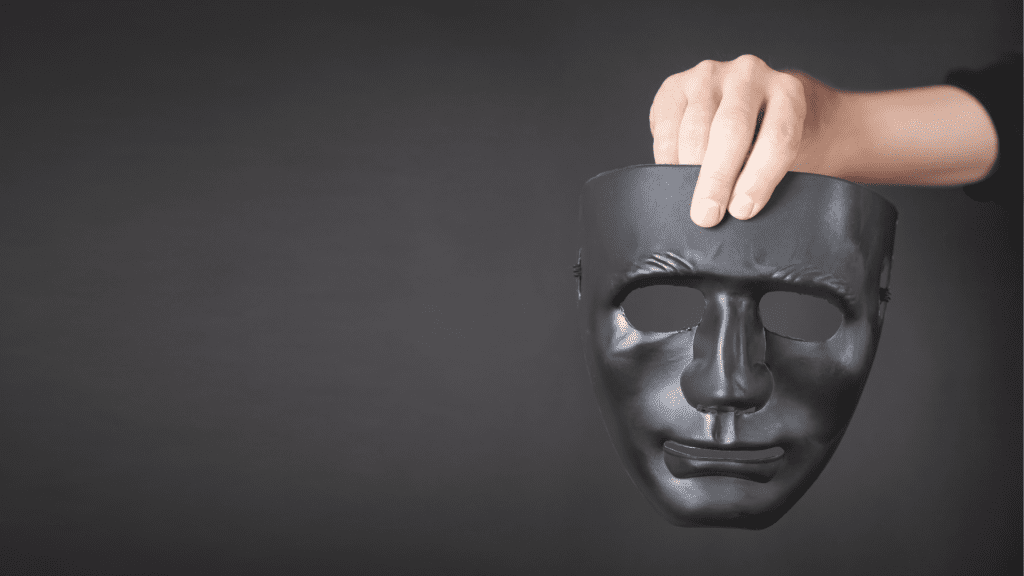
What am I doing here…among these people..? Everyone’s better/smarter/more gifted [fill in your blank] than I am… I shouldn’t be here…they think I’m at their level…wait until I mess up…I’ll be found out…seen for what I really am…
Any of these thoughts ever crossed your mind? I imagine they plague many of us from time to time. Perhaps you’ve been in a job where you felt you weren’t making the grade. You’ve compared yourself to colleagues, always falling short. You’ve feared that it will only be a matter of time before you’re exposed in a very public way. You’ve pictured yourself leaving under a cloud of shame and disgrace.
It’s not just the workplace, of course. We can experience similar feelings in a learning environment (they must have mixed up my grade with someone else’s), in relationships (they’re putting up with me, but if they really knew me…), or in church (they’re all so godly – my devotional life’s a mess…).
Feeling like an imposter
These common experiences have come to be known as Imposter Syndrome. An imposter is someone who passes themselves off as another and this same sense of deceiving those around you is at the core of this struggle. A true imposter will deliberately scam their way through life (think Frank Abignale of ‘Catch Me If You Can’ fame, a self-confident fraudster who through his life posed as an airline pilot, doctor, lawyer, and college professor!) But in contrast, those with Imposter Syndrome are haunted by self-doubt and a sense of insufficiency. Others might view them as eminently capable. But the dominating mindset in Imposter Syndrome is, ‘I’m a fraud and I’ll be uncovered for what I truly am.’ I doubt my competency and I fear exposure.
It can lead to other struggles like anxiety or depression. We stress out, overpreparing to compensate for our deficiencies. ‘I’ll fake it ‘til I make it’. Or we fall into patterns of procrastination – fear of failure prevents us getting started.
The heart of an imposter
So, there are two main features to the struggle. First, a sense of inadequacy or doubting my competency. This is a question of self-evaluation, or how I see myself. Second, a fear of exposure – I’ll be seen and judged. This is a question of consequences. But what is at the heart of Imposter Syndrome? What’s at the heart of my Imposter Syndrome? Some questions might help.
First, whose standards am I living to? If I doubt my competency then what am I measuring myself against? Is it my own standard of performance or perfection that I feel inadequate before? Or is it the standards that I assume others expect? Do I compare myself with my perception of their lives, performance, godliness, or gifts? Has my heart erected those standards to loom over my life?
Second, whose judgment matters most to me? If I fear exposure, then what consequences am I afraid of and from whom? Is it a ruined reputation with colleagues, friends, family? That I’ll let others down? The pain of embarrassment? Witness destroyed? An income lost?
God loves an imposter
God speaks to our sense of inadequacy and the false standards that we fail to measure up to. He lifts our eyes to a better standard: to love the Lord your God with all your heart and with all your soul and with all your mind and your neighbour as yourself (Matthew 22:37-39). He presents his Son as the perfect image of God (Colossians 1:15) who has lived this perfect standard of life and love for us (Hebrews 7:26). Before him we are truly inadequate! Yet by faith we are united to him, he is our life (Colossians 3:4), and he has become our wisdom, righteousness, holiness and redemption (1 Corinthians 1:30). We receive his adequacy. His true competency replaces my true failure.
What is the effect of this? I am now free to look at my life, face my insufficiency, and be poor in spirit. I can be weak because I trust in a strength that is not my own. But as well as owning weaknesses, I can honestly evaluate strengths and gifts. In the clear light of a standing in Christ, I can face up to and take joy in how he has made me and what he calls me to.
God also speaks to our fear of exposure. This is an ancient problem, dating from the entrance of sin when we hid behind foliage. We fear being seen for what we truly are. But Christ has taken my most private failures and been exposed in my place upon a cross. He was made to be sin for me. This frees us from the fear of judgment. It is in this vein that Paul could say ‘I care very little if I am judged by you or by any human court; indeed, I do not even judge myself.’ (1 Cor. 4:3) Why? Because he knew his identity as a servant of Christ (1 Cor 4:1). Therefore, he could say, ‘It is the Lord who judges me.’ (1 Cor 4:4). This Lord will ‘bring to light what is hidden in darkness and will expose the motives of the heart’ (1 Cor 4:5). But with Christ as his righteousness this judgment holds no dread.
We are all imposters before a holy God. Isaiah speaks for us all when he realized his inadequacy before the throne of the LORD and he was indeed exposed, ‘Woe to me, I am ruined!’ (Isaiah 6). Praise God that the true Son came for imposters, to free us from failure and fear, to touch us and to say, ‘your guilt is taken away and your sin atoned for.’ No more to be imposters, but instead children, known and beloved. This is the Father we turn to when the doubts lurk. I shouldn’t be here becomes This is where God has called me. Everyone’s better than me becomes How can I serve and bless those around me? I’ll be found out becomes I will fall short at times and it will be an opportunity for humility, learning and growth. In our Father’s arms, he reassures us that we are no longer imposters, but sons and daughters with nothing to prove – and that security changes everything.

